
About Elena
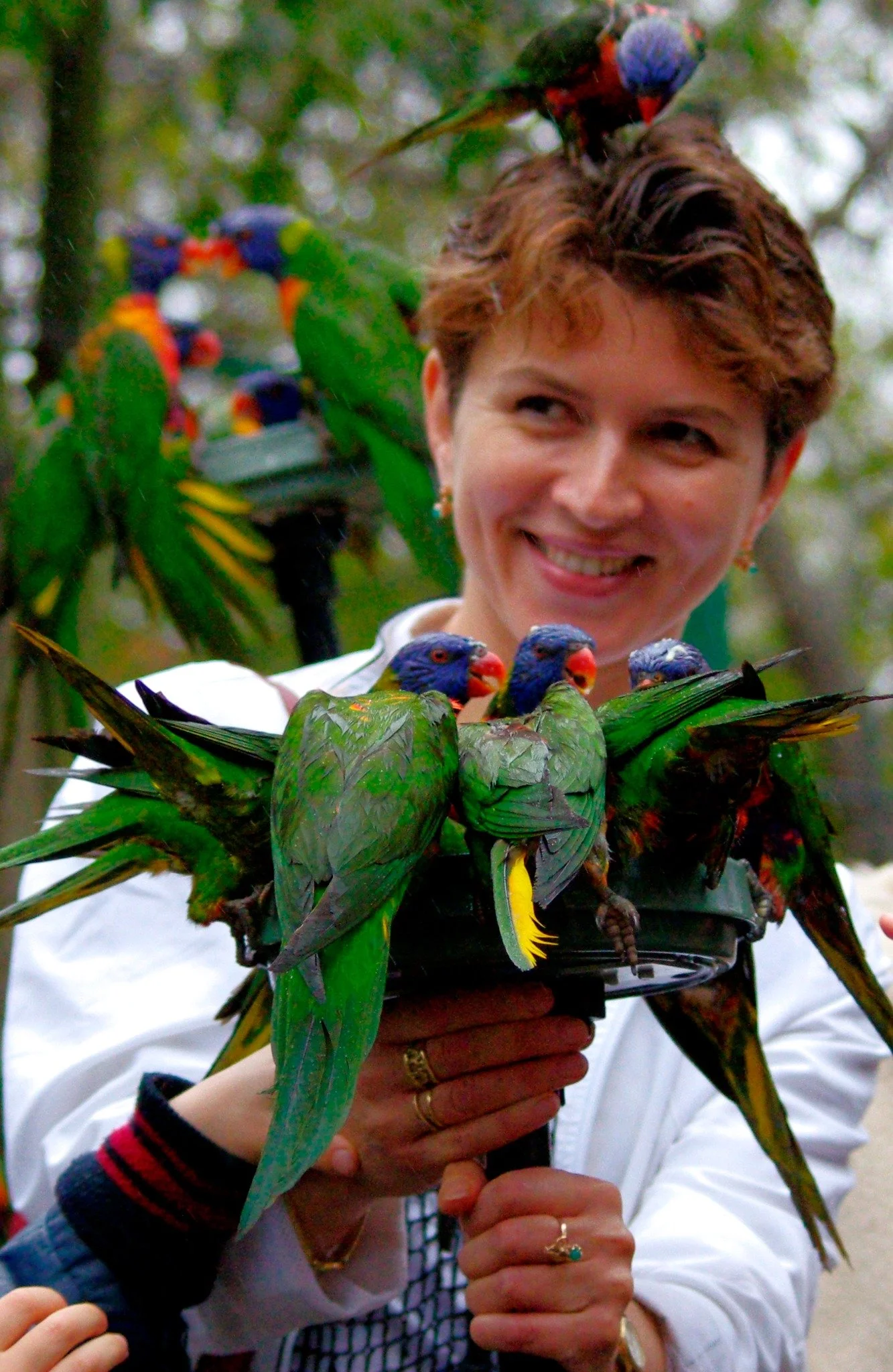
At the age of 4, my passion for learning foreign languages was ignited. I discovered an old Latin textbook abandoned on the attic of my home. The foreign letters and words fascinated me and then my journey of learning foreign languages started. During my childhood there was no internet, I lived behind the Iron Curtain, so I relied on my pen pals from Australia and Germany to support my language learning. Later they became lifelong friends.
During my student life I established my own company as an official representative of the Goethe Institute, recruiting students worldwide. Today I continue being Goethe Institute representative, promoting German culture and teaching German to students of various abilities.
My journey through life has been a beautiful mosaic of cultures, languages, and countless fascinating encounters, thanks to my love for travel. I lived and worked in Germany, Russia, Australia, UAE, Oman, Saudi Arabia and the UK.
My robust academic credentials are diverse. I hold a PhD in Linguistics, MBA (IB) from the University of Southern Queensland, Australia, BEdu(Hons) in Applied Psychology and English (Pyatigorsk Linguistic University and have fine-tuned my teaching skills with a PGCE/QTS qualification from Bath Spa University, UK. I also hold a B2 certificate from the Goethe Institute, Germany. Since 2018, I have been also a full member at the Chartered Institute of Linguists, London. These solid credentials have not only honed my expertise but also ignited a deeper passion for teaching.
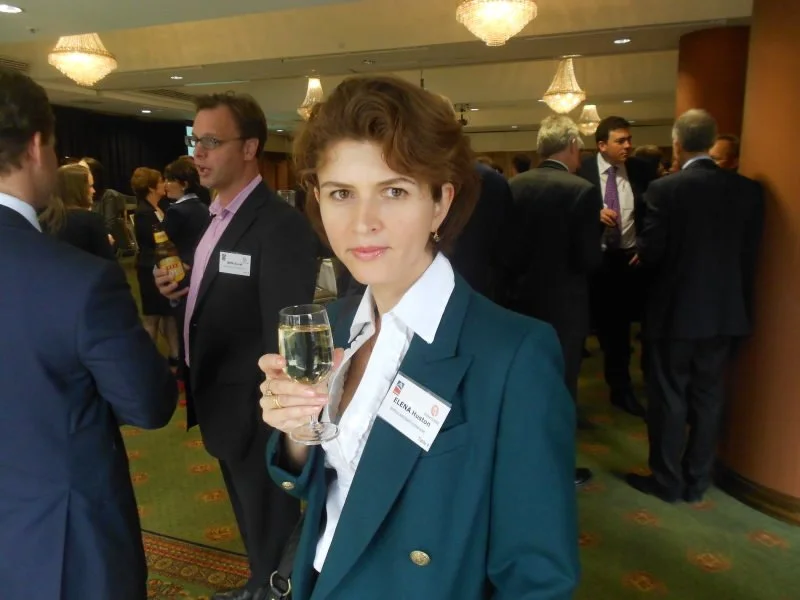
Professionally, I've been enriching minds since 2005, specializing in teaching Russian, German and English as foreign languages. My career has been a rewarding journey, from guiding over 300 students to success in their language exams to developing comprehensive bespoke language courses for MoD and FCDO personnel as a Russian Language Instructor at QA Ltd. in Cheltenham and in Shrivenham DCLC, Defence Academy.
In addition to teaching, I've established a successful business in translation and interpretation, serving a diverse clientele across Russia, UAE, Germany, and the UK. My work spans general, medical, legal, business, aviation and tourism translation, including notable projects like translating tender application for Moscow City Agglomeration Development, interpreting at international air shows in Dubai and Russia as a simultaneous interpreter for prestigious multinational clients, including Lockheed Martin (USA); Bombardier (Canada); MIG/MAPO(Russia); British Aerospace(UK); Allied Signal (USA).
I specialise in teaching German/Russian/English as a foreign language to students following a variety of curricula including B2/C1 Goethe Institute Certificate, GCSE, IGCSE and A Level. To engage my students, I make my language lessons come alive with real world examples and activities. This accelerates learning and increases motivation. I am also a specialist in exam preparation (MODLAB for military personnel) and MFL tutor for Whitehall government officials and Foreign Office diplomats.
This blend of teaching and translation has enabled me to craft and deploy innovative teaching techniques catering to various age groups and learning styles.
In my spare time I play piano and accordion, enjoy gardening, walking and travelling.
Authentic Teaching Method
My teaching approach blends my own research on emotional attachment and online learning with work by Barry Smith and Dr. Gianfranco Conti. I provide students with translations, so they do not have to ‘guess’ and have a scaffold on which to build. I find that students gain confidence to use phrases with lots of guided practice. During the initial stages of learning, my approach is quite controlled, with significant teacher input (reading aloud lots, as opposed to textbook type listening). With the ‘control’ slowly being taken away at later stage (images instead of words/picture stories), students develop ‘self-efficacy’ leading to increased engagement and improved learning results.
As with the Conti method, rather than prioritizing language structure or grammar, I emphasise metacognitive and communication skills. My authentic language learning with the Conti method (ALLCM) accelerates learning. It embeds culturally authentic resources that really inspire students and enhance their learning in an informal and relaxed way. For example, after mastering a short text with high frequency structures (“I like doing something”), students are immersed into a culture by watching a short video extract, where they can recognize the same learnt structures in an authentic context (e.g. from interviews taken in the streets of Germany/ Russia, or from authentic songs). Interviews and songs are quite repetitive, and students are not only exposed to high frequency phrases but also have an opportunity to enrich their vocabulary in a relaxed way. This method works quite well in mixed ability groups, where more confident students build their own sentences whilst their peers benefit from repetition.
In terms of teaching Grammar, I use cognitive method, where students master grammatical patterns using cognates (words which are the same or similar in foreign language). This method gives students confidence to transfer the attained skills to more complex structures and vocabulary more naturally and effortlessly.
ALLCM approach
Specifically, my ALLCM approach involves:
Building sentences that resonate with real life communicative situations.
Applying and recycling high-frequency vocabulary in an activated learning community, so students achieve fluency. This is achieved by carefully selecting opportunities to revisit key vocabulary, and recycling what has been learnt in different contexts. For example, endings in the Russian genitive case can be applied in a variety of real situations, highlighting the multi-functionality of this case. Rather than just remembering genitive endings, students visualise the functions where it can be used. Cognates provide a good starting point for introducing endings without throwing students out of their “comfort zone” with unfamiliar foreign words.
Working with parallel texts in both the target language and English enables students to compare differences and similarities between the two languages (gap fills, tangled translations, different sentence order).
Pre-teaching material to prime students for future learning (this technique facilitates the acquisition of the to-be-taught items from authentic texts).
Delivering legible and logical presentations with strong visuals to support the learning with dual coding of images/words for retention. Replacing the English translation with pictures promotes self-efficacy.
Segmenting content by unpacking target collocations and colligations to underscore linguistic patterns. This relies on the inclusion of the pattern connecting high-frequency collocations in each column of the sentence builder.
Chunking, so students notice phonological and phonotactic patterns (e.g. French/Russian: which chunks include liaison or assimilation which could be useful for the student to notice).
In conclusion, my ALLCM lessons creatively blend science with art. My Russian and German lessons are underpinned by a sound pedagogy, Psychology studies and use advanced instructional techniques. I carefully select authentic resources that build new, but also recycle acquired language, so students can engage in spontaneous communication for target language fluency.
Education and Credentials
PhD (Linguistics, E-learning)/ University of Southern Queensland, Australia
PGCE / QTS MFL Secondary (German/French/ Russian) / Bath Spa University, UK
MBA (International Business)/ University of Southern Queensland, Australia
Bachelor of Education (Hons) -English, Linguistics, Applied Psychology
ZdaF Certificate of German as a Foreign Language (distinction)/ GOETHE-INSTITUTE, Iserlohn, Germany
Full Member of CIOL (Chartered Institute of Linguists)/Translator (CL(/Education(London)
Certificate of Arabic (level 1)/ University of Queensland, Australia
DBS Certified until January 2027
Achievements, Publications and Awards
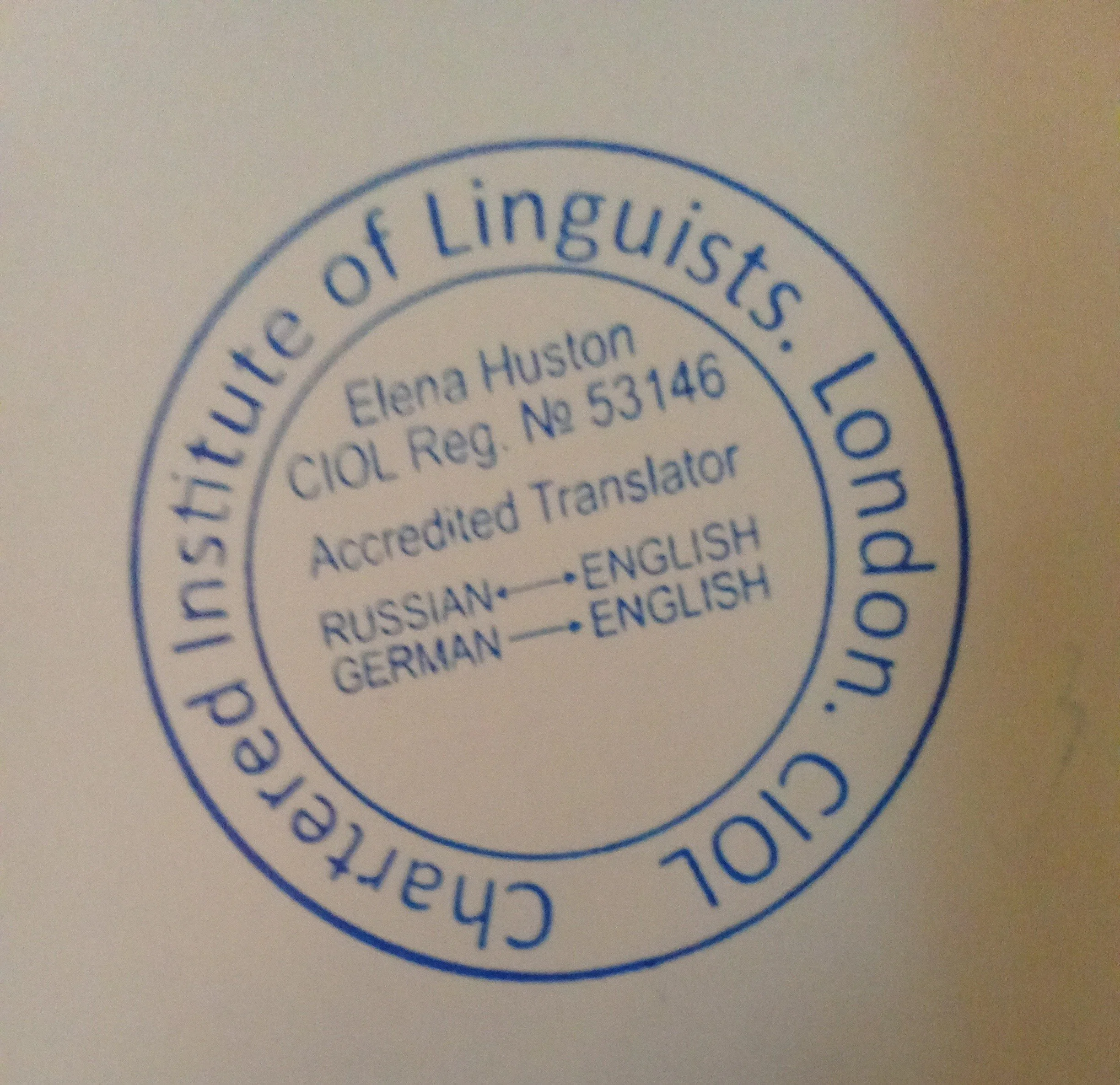
Full Member and Chartered Translator/Educator (German/Russian) at the Chartered Institute of Linguists since June 2018 ( Reg No: 53146)
Association for Languages (ALL) Membership Number: 83631, since September 2019
Parliamentary Group MFL session, House of Lords
Contributed to the debate on current tendencies in schools in relation to the report, published by Institute of Education. “Boys taking MFL at GCSE level”
Goethe Institute, Munich Teacher’s Award July-Oct 2023
Awarded a full stipend to participate in international workshops for leading world teachers
British Council Scholar
Awarded a full scholarship for teaching MFL languages August 2018
Article publication, Education Sciences Journal, Nov. 2019
Learning Dispositif and Emotional Attachment: A Preliminary International Analysis
Book publication, Completed a chapter
Non-Educational and Non-Technological Theories and Approaches, and Their Implications for Education and Technology: A Proposal by 200 Academics
Thesis publication Emotional Attachment for Informal E-Learning Second Language Learning, USQ, Australia
Conference Presentation Paper Clute Institute, USA
Delivered a presentation of academic paper at the International Education Conference, Venice, Italy (05-09/06/2016)
Postgraduate Equity Scholarship, USQ Business School , 2009 Awarded a Postgraduate Equity Scholarship for successful studies in MBAI program by the Vice-Chancellor, USQ, Australia.
Development of a new program Acted as a UPP (University Preparation Program) Liaison Officer, submitted crucial information to Assistant Director Studies, Queensland University, ordered books for UPP and Foundation courses for the department of Sohar University, Oman